This Amazing course is based on MongoDB. You will learn in detail about Introduction to MongDB, MongoDB Queries, Conditional Operators, Limiting Queriers etc.
Course Description
- MongoDB is has become a big deal and is far easier to learn. Document databases like MongoDB fit well with big AJAX applications or object-oriented back ends. They also scale nicely.
- There’s more than one to try, but you should probably start with Mongo, because it will be best for you from a career perspective — most companies are already familiar with this database technology.
- The company behind MongoDB, 10g, is extremely well-capitalized with a war chest of $81 million.
- There are a number of technical considerations involved in choosing a database for a new project, but if you’re looking to learn a new technology, you need the reassurance that there is traction in the field and resources available to grow as a developer or ops professional. Let me tell you why this is the right time to learn MongoDB.
- Product maturity grows due to increased usage and familiarity. MongoDB is open source and has grown along with the community–thanks both to code contributors, community testers and even those who vote on new features.
- If you’re learning MongoDB now, you will be learning to use a solid product that has industry validation and similar functionality to many RDBMS systems you’ve encountered before.
- Interest in MongoDB spiked in 2010, according to Google Search Insights and the momentum has only continued to grow. This is because the technology has matured, 10gen’s development on MongoDB has increased and adoption has grown. MongoDB has enabled developers to build new types of applications for cloud, mobile, social, making MongoDB developers an invaluable resource for companies looking to innovate in each of these areas.
- Additionally, MongoDB is the most widely adopted NoSQL technology. MongoDB skills are in high demand from businesses, and your peers are learning the skills to stay relevant.
- Employers are looking for talented engineers who stay up-to-speed on new technologies. But even if you’re not looking for a new position, learning MongoDB can place you in line to lead a new project or oversee a large database migration.
- Developers at companies like eBay, Disney, Carfax, Edmunds and Cisco are running large production deployments of MongoDB. Companies like The Guardian have committed to prototype all new projects on MongoDB–calling it the “MongoDB First” philosophy. If you work at a large engineering company, it’s likely that some new projects for social communications, advanced analytic’s products, content management or archiving could use a MongoDB back-end. With the right expertise, you can position yourself to lead the project.
What are the requirements?
- Knowledge of databases (especially RDBMS) is essential
- Knowledge of JSON is preferred
What am I going to get from this course?
- Over 13 lectures and 2 hours of content!
- To study a new database technology that is quite different from the traditional way of managing databases
- Learn the basic concepts and start using MongoDB
Who is the target audience?
- Students
- Developers and architects who want to explore the adoption of NoSQL solutions, especially MongoDB into their applications
- Database developers who want to know the difference between MongoDB and traditional RDBMS systems
- Anyone who wants to learn a new database technology.
How to access:-
Step 1 - eduCBA sends the redemption coupon along with the registration link.
Step 2 - Student will register with his register email id and coupon
Step 3 - Student receive the course access and password on his/her email id
Step 4 - Login using your email id and password and start learning
Benefits of online course:
1. High Quality Content
2. Learn Anywhere Anytime & at Your Pace
3. 24X7 Customer Support
4. Complete Student Support throughout the Program
5. Online Video Training Material
6. Lifetime course access
For any query call/miss call-
Mob-+918587999769/9818826705
Curriculum
Section 1: Overview of NoSQL
1 Introduction to NoSQL And SQL vs NoSQL
2 CAP Theroem and ACID BASE
Section 2: Learning about MongoDB features
3 Introduction to MongDB
4 Data Model,Installation and CRUD
5 MongoDB Queries
6 Memory Mapped File and Replica Set
Section 3: Understanding Queries, Operators & Expressions
7 Inserting Queries and Search Queries
8 Sorting Queries
9 Limiting Queriers
10 Updating Queries
11 Deleting Queries
12 Conditional Operators
13 Regular Expressions
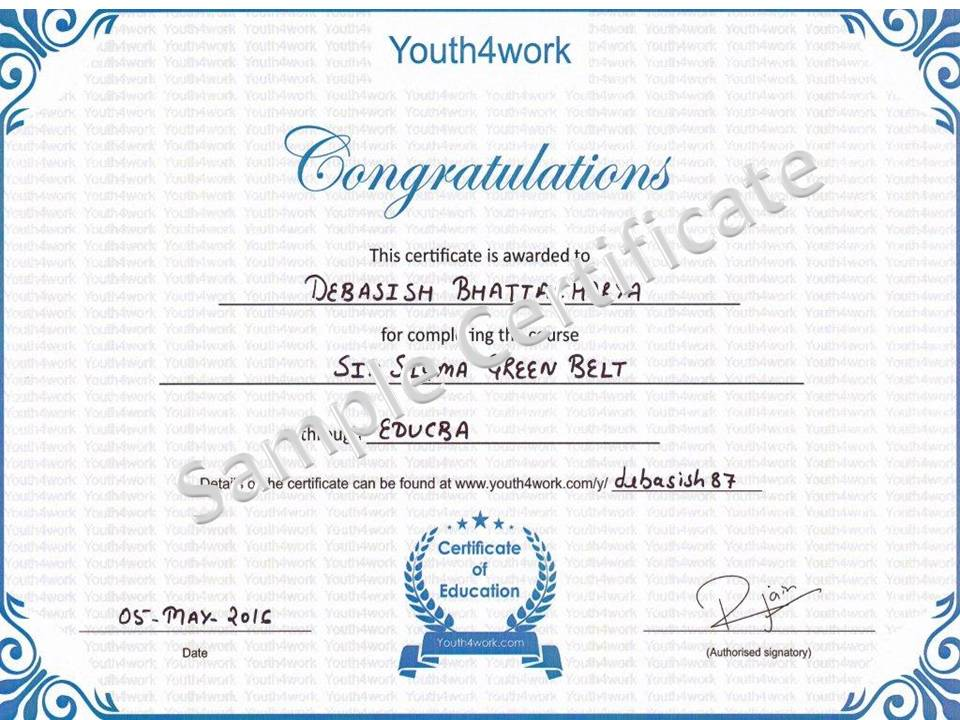
Here is a sample for the course completion certificate which you will recieve after complete the course. This certificate is widely accepted across industries and will boost your chances to grab the job opportunities.
Mail us at: [email protected] with below details to receive your certificate:
- Name
- Course Name
- Date of Completion
- Address